Blooming Through the Weight: Managing Complex Trauma (CPTSD) in Spring
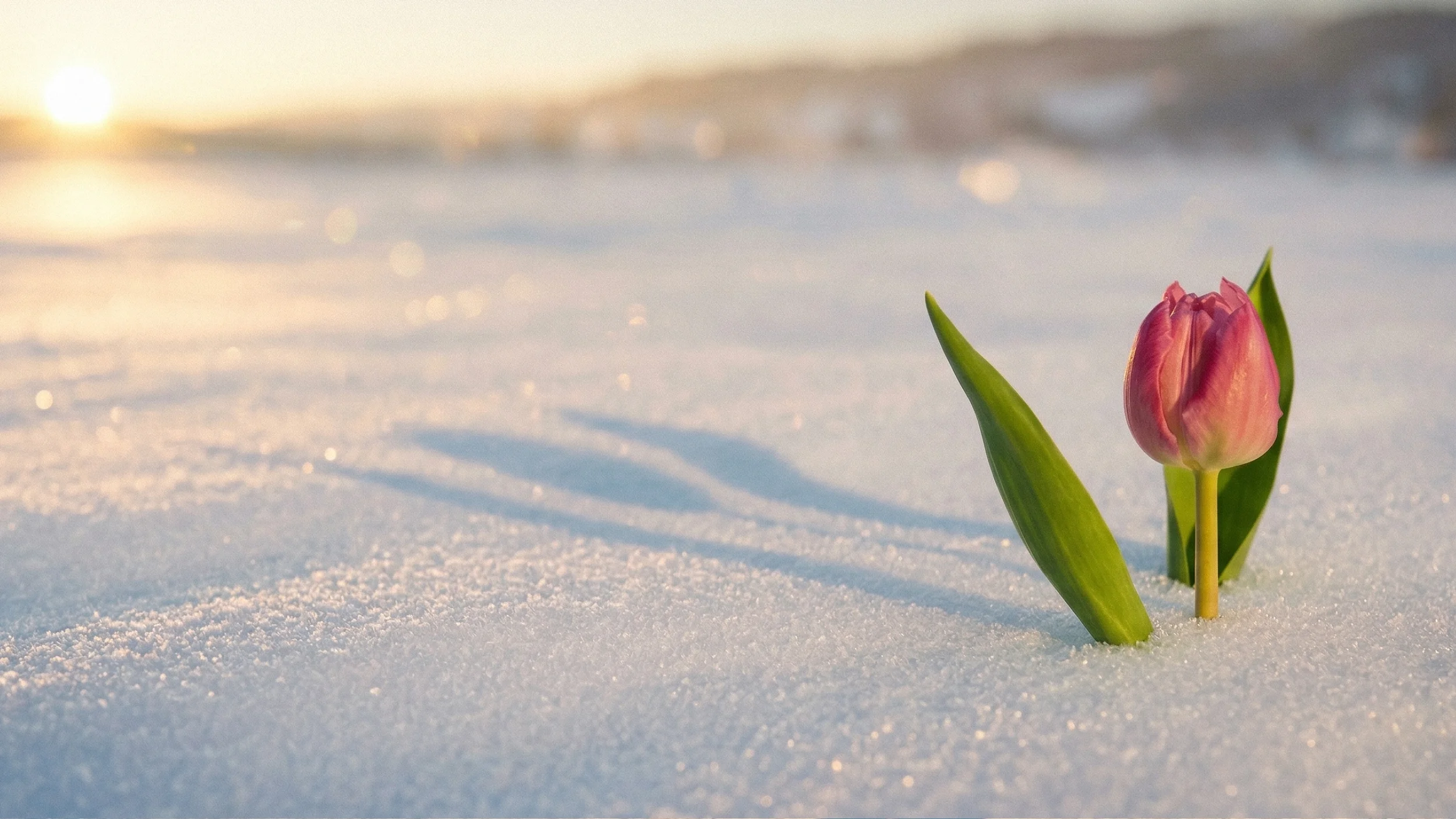
"Spring does not ask the soil whether it is ready. It simply arrives, and gets to work."
Every year, spring shows up without asking permission. And every year, for some of us, that can feel strange. The world outside is doing its bright, hopeful thing, and meanwhile, you are still carrying what you were carrying in February. The weight did not melt with the snow.
If you are living with complex post-traumatic stress disorder (CPTSD), you know this feeling well. Seasons change, but you remain. This is not because you are broken or stuck, but because healing does not follow the calendar. No amount of longer daylight undoes what your nervous system has been quietly managing, sometimes for decades.
This post is dedicated to:
The Black woman who has held it together for everyone around her for so long she has almost forgotten what it feels like not to.
The South Asian mother doing it alone; keeping the household running, showing up to work, and falling apart quietly on Tuesday evenings when the house finally goes still.
The Person of Colour sitting in a boardroom, classroom, or clinic where no one quite looks like you, and the effort of that never quite gets acknowledged.
Every professional woman who has built something impressive on the outside while something raw and exhausted lives on the inside.
This post is for you. You are allowed to welcome spring and still feel heavy. Both things can be true at once.
What is Complex PTSD (CPTSD) vs. Standard PTSD?
Most people have heard of PTSD, but fewer know that complex PTSD (CPTSD) is a related but distinct experience. It grows not from a single terrible event, but from prolonged or repeated harm, often in circumstances where leaving was not an option. This can include childhood abuse or neglect, an unpredictable home environment, years inside harmful institutions or systems, or relationships built on control.
The Canadian Mental Health Association (CMHA) describes this kind of trauma as extending far beyond typical PTSD symptoms, reshaping how you form relationships and navigate the world.
The World Health Organization (WHO) formally recognizes CPTSD in its International Classification of Diseases (ICD-11), noting three additional layers beyond standard PTSD:
Difficulty regulating emotions
A deeply negative sense of self
Persistent problems in relationships
To that clinical list, I would add something less technical: a bone-deep exhaustion and a grief that is hard to name because it belongs to so many things at once.
The Added Layers of Racial Trauma and Microaggressions
For Black Canadians and People of Colour, this already complicated picture is layered with even more. Racism is not just an emotional experience; it is a chronic stressor. It shows up in daily interactions, institutions, healthcare, the workplace, and in the accumulation of moments that quietly but consistently communicate that you do not fully belong or that you must work twice as hard to be seen as half as capable.
The Data: A 2023 study in the Canadian Journal of Psychiatry found that 95.1% of Black Canadians aged 15 to 40 had experienced at least one traumatic event in their lifetime. Everyday racial discrimination, microaggressions, and internalized racism were all significant risk factors for PTSD symptoms. This is the lived texture of many of our days.
The Impact of Intergenerational and Historical Trauma
The grief and survival strategies passed down through families who have lived through colonization, slavery, displacement, and migration mean that some of what you carry did not start with you. Research in the Journal of Marital and Family Therapy (2023) explored how historical and race-based trauma compound one another in Black families. You may be carrying wounds that belong, in part, to your grandmother. That is real, and it counts.
For Black women and women of colour especially, this is often wrapped in a cultural expectation of strength. Archetypes like the "Strong Black Woman" or the "model minority who does not complain" ask you to be invulnerable and to keep going regardless. When internalized since childhood, asking for help can feel like a kind of betrayal.
Let me say it plainly: your responses to what you have been through are not character flaws. They are the intelligent, adaptive responses of a nervous system that learned it needed to protect you. They made sense then, but you are allowed to want something different now.
Self-Care and Somatic Healing Strategies for Complex Trauma Recovery
Self-care when you are in the thick of complex trauma is not just about bath bombs or gratitude journals; though rest matters and pleasure is worth protecting. Real self-care is quieter and harder. It is learning that your needs are not an inconvenience, that you are allowed to take up space, and that rest is not something you earn.
Here are some places to start, with no pressure to do them all or do them perfectly:
Finding Culturally Informed Trauma Therapy in Ontario
There is a difference between a therapist who is technically trained in trauma and one who understands the specific weight of racialized trauma, intergenerational harm, and navigating systems as a woman of colour. The CMHA and many provincial networks can help you find culturally informed care. You deserve a space where you do not have to explain the basics before you can begin to heal.
Working With Your Nervous System
CPTSD lives in the body. Before processing the past, your body needs to feel safe. Try slow breathing, placing a hand on your chest, taking a short walk, or sitting with your feet flat on the floor to notice you are okay in this moment. These small acts teach the nervous system that it can soften.
Say it out loud
Complex trauma thrives in silence. You do not need a polished narrative; simply putting words to it ("This is hard," "I am struggling") is often the first step toward changing it.
Claim the small moments
If you are raising children alone or working a demanding job, you may not have long stretches for recovery. Ten minutes of quiet, a screen-free lunch, or a walk without running through a to-do list are genuine acts of care.
The Power of Community Healing Models
Research on community-healing models shows that collective approaches are not just culturally meaningful, but clinically effective. Healing often cannot happen alone. A support group or a circle of trusted people are part of the medicine.
Give yourself permission to just notice spring
You do not have to arrive at this season renewed, resolved, or lighter. Spring is not a deadline; it is just a quiet invitation to notice the world trying again. You can witness that without having to match it. That is enough.
You are not behind in your healing, and you are not doing it wrong. You are a person carrying real weight, in a real body, doing the best you can with what you have. That is already something.
With care, from our team.
References & Sources
Bookman-Zandler, R., & Smith, J. M. (2024). Healing the collective: Community-healing models and the complex relationship between individual trauma and historical trauma in First Nations survivors. Journal of Psychology and Theology. https://doi.org/10.1177/00916471221149101
Canadian Mental Health Association. (n.d.). Post-traumatic stress disorder. https://cmha.ca
Cénat, J. M., Dalexis, R. D., Darius, W. P., Kogan, C. S., & Guerrier, M. (2023). Prevalence of current PTSD symptoms among a sample of Black individuals aged 15 to 40 in Canada: The major role of everyday racial discrimination, racial microaggressions, and internalized racism. Canadian Journal of Psychiatry, 68(3), 178–186. https://doi.org/10.1177/07067437221128462
Kirk, K. F., Jackson, J. L., Sagui-Henson, S. J., Wang, E., Semaan, F., Prescott, M. R., Welcome Chamberlain, C. E., Castro Sweet, C. M., Ijebor, E. E., & Knott, L. (2023). Race-based experiences and coping as predictors of BIPOC mental health provider burnout and stress during COVID-19. Journal of Prevention and Health Promotion, 4(3-4), 323–338. https://doi.org/10.1177/26320770231189611
Lee, A. T., Chin, P., Nambiar, A., & Haskins, N. H. (2023). Addressing intergenerational trauma in Black families: Trauma-informed socioculturally attuned family therapy. Journal of Marital and Family Therapy, 49(2), 447–462. https://doi.org/10.1111/jmft.12632
Statistics Canada. (2022). National PTSD awareness day data report. https://statcan.gc.ca
Statistics Canada. (2023). Survey on mental health and stressful events, 2023. https://statcan.gc.ca
World Health Organization. (2019). International classification of diseases, 11th revision (ICD-11). Complex post-traumatic stress disorder.
Note: This blog post is written for informational and supportive purposes only and is not a substitute for clinical diagnosis or professional mental health treatment. If you are looking for culturally informed support as you navigate complex trauma, I invite you to reach out. Book a consultation with me today to explore how we can work together.